
What the Record Shows About McCook’s Water System
- Anna LaBay

- 6 hours ago
- 5 min read
Editorial: What I’ve Seen and What the Record Shows About McCook’s Water System
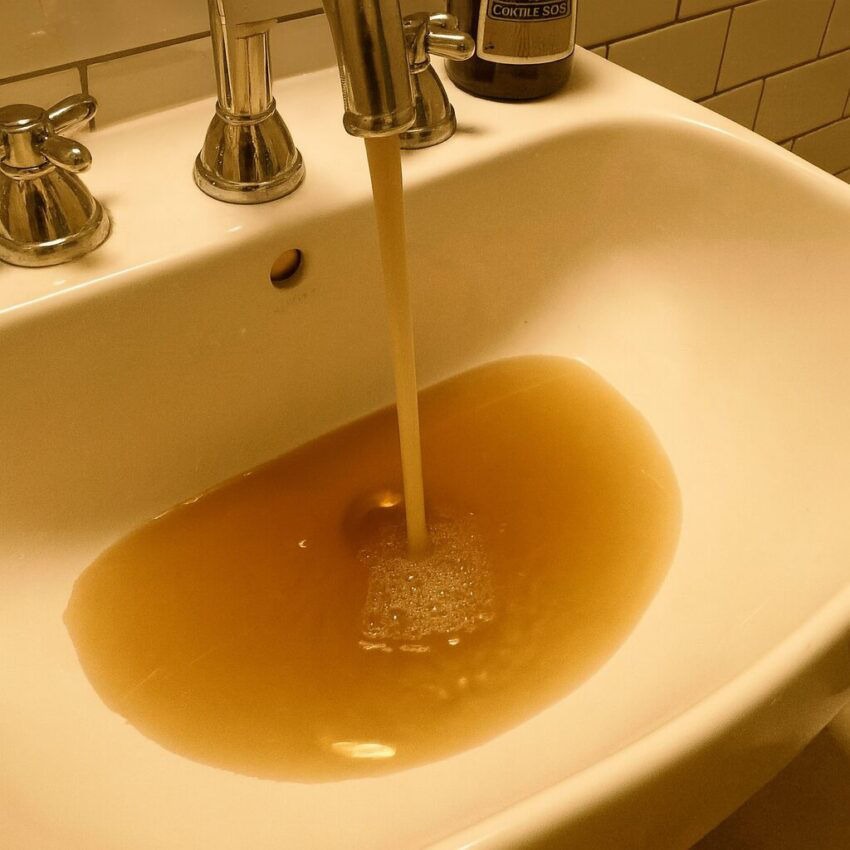
There’s been a lot of frustration about the appearance of McCook’s water.
That frustration is understandable. No one wants to turn on their faucet and see discolored water.
But I want to add context, not as the City, not as a candidate, but as someone who has been consistently showing up and reviewing the public record.
Over the past two years, I have attended nearly every McCook City Council meeting. I have reported on these issues multiple times. I’ve reviewed meeting minutes, city reports, and supporting documents, the same information that is publicly available to anyone.
What I can say is this:
This is not a situation where nothing has been discussed or nothing has been done.
What People Are Seeing Right Now
The discoloration people are seeing is being attributed to manganese, a naturally occurring mineral found in groundwater.
Manganese can cause water to appear brown, orange, or rust-colored especially when it becomes stirred up in the system through hydrant flushing, maintenance, or changes in water flow.
According to the City’s most recent update, a manganese removal treatment process is already in progress at the water treatment plant.
One question that naturally comes up is:
If this has been discussed for years, why are people still seeing it?
The reality is, people have been seeing it for a long time.
Discoloration caused by manganese isn’t always
constant. It can come and go depending on conditions in the system — including water flow, maintenance, hydrant flushing, or changes in pressure.
So while the issue itself isn’t new, there are times when it becomes more noticeable or more widespread, which is often when it gets more attention.
What the Data Shows
The City’s 2025 Annual Water Quality Report supports what officials have been saying.
The report shows:
• No violations were issued for drinking water standards in 2025
• Contaminants like arsenic, nitrate, and uranium remained within federal limits
• Lead levels were below the action level overall, with one site exceeding
• A lead service line inventory has been completed
The report also notes the presence of naturally occurring minerals in groundwater consistent with manganese being the cause of discoloration.
In short:
The water meets regulatory standards, but that doesn’t mean it always looks clear.
How We Got Here: A Multi-Year Process
This situation didn’t happen overnight.
2024: Planning, Funding, and Early Decisions
In 2024, the City began laying the groundwork for major infrastructure improvements:
• Applied for approximately $14.5 million in USDA funding for a wastewater treatment facility upgrade
• Approved up to $9 million in revenue bonds and $8 million in interim financing
• Hired Miller & Associates to design long-term system improvements
At the same time, the City began addressing issues with its deep injection well, a critical part of the wastewater system. Initial bids for necessary modifications were rejected in December 2024, delaying progress.
The City also updated regulations, including passing a Cross Connection Control ordinance to modernize water system protections.
2025: Projects, Repairs, and a Turning Point
In 2025, work continued across multiple areas:
• Water distribution improvements were completed on South Street and Ravenswood Road
• A nearly $500,000 water system improvement project was awarded and completed
• Additional work along West 5th Street was completed despite delays
The deep injection well, which had faced delays the year before was ultimately repaired in late 2025 after a complex effort involving seven contractors from multiple states.
A key moment came in July 2025, when engineers presented a full assessment of the water treatment plant and distribution system to the City Council.
That presentation made one thing clear:
Significant upgrades were needed and they would come with significant cost.
Later in 2025, the City:
• Approved updated water and sewer rates
• Adopted a water and wastewater bill adjustment policy
• Continued completing system improvements
2026: Where Things Stand Now
As of early 2026, the City is continuing work on several major fronts:
• Working to secure $3.2 million in federal funding for water treatment plant improvements
• Pursuing State Revolving Fund (SRF) loans
• 0% interest
• Up to 40-year repayment
• Up to 60% loan forgiveness, reducing the burden on residents
• Addressing the EPA-mandated lead service line replacement program
• Moving forward with design work on additional system improvements
At the same time, the City’s most recent update confirms:
• Manganese removal treatment is in progress
• Ongoing upgrades are being made at the water treatment plant
• System maintenance and mapping efforts are continuing
It’s also important to note that the City is working on more than one issue at once — balancing both long-term system upgrades and federal requirements like lead service line replacement.
How This Is Paid For
One of the biggest misunderstandings I continue to see is how these projects are funded.
Projects like the ballfield and swimming pool were funded through a voter-approved sales tax.
The water system is different.
Water and wastewater infrastructure is funded through the utility system, meaning it is paid for through user fees, not sales tax and not property tax.
That means:
• Improvements require long-term planning
• Funding must be built into the system over time
• Rate increases are often part of that process
At the same time, the City has been actively working to secure outside funding, including federal dollars and programs that offer partial loan forgiveness, to reduce how much of the cost falls directly on residents.
What I’ve Seen
I can’t speak to what motivates every individual council member. I can’t say who cares and who doesn’t.
But I can say this:
I have sat through those meetings.
I have listened to engineers explain system limitations.
I have heard discussions about funding, timelines, and trade-offs.
I have watched decisions being made, not always popular ones, to move projects forward.
This is not a conversation that just started.
And it is not one that has been ignored.
People don’t sit through hours of meetings, presentations, and infrastructure discussions without some level of responsibility to the work. I don’t, and I’m there by choice.
Final Thoughts
It is completely fair to be frustrated when you see discolored water.
It is fair to ask questions.
It is fair to expect answers.
But it is also important to understand the full picture.
The information is there.
The meetings are open.
The discussions have been happening.
That doesn’t mean people have to agree with the decisions being made.
But it does mean this:
This didn’t happen overnight. And it isn’t being ignored.
I’ll be visiting with city officials this week to continue asking questions and better understand where things stand now.
As always, I’ll share what I learn.


Comments